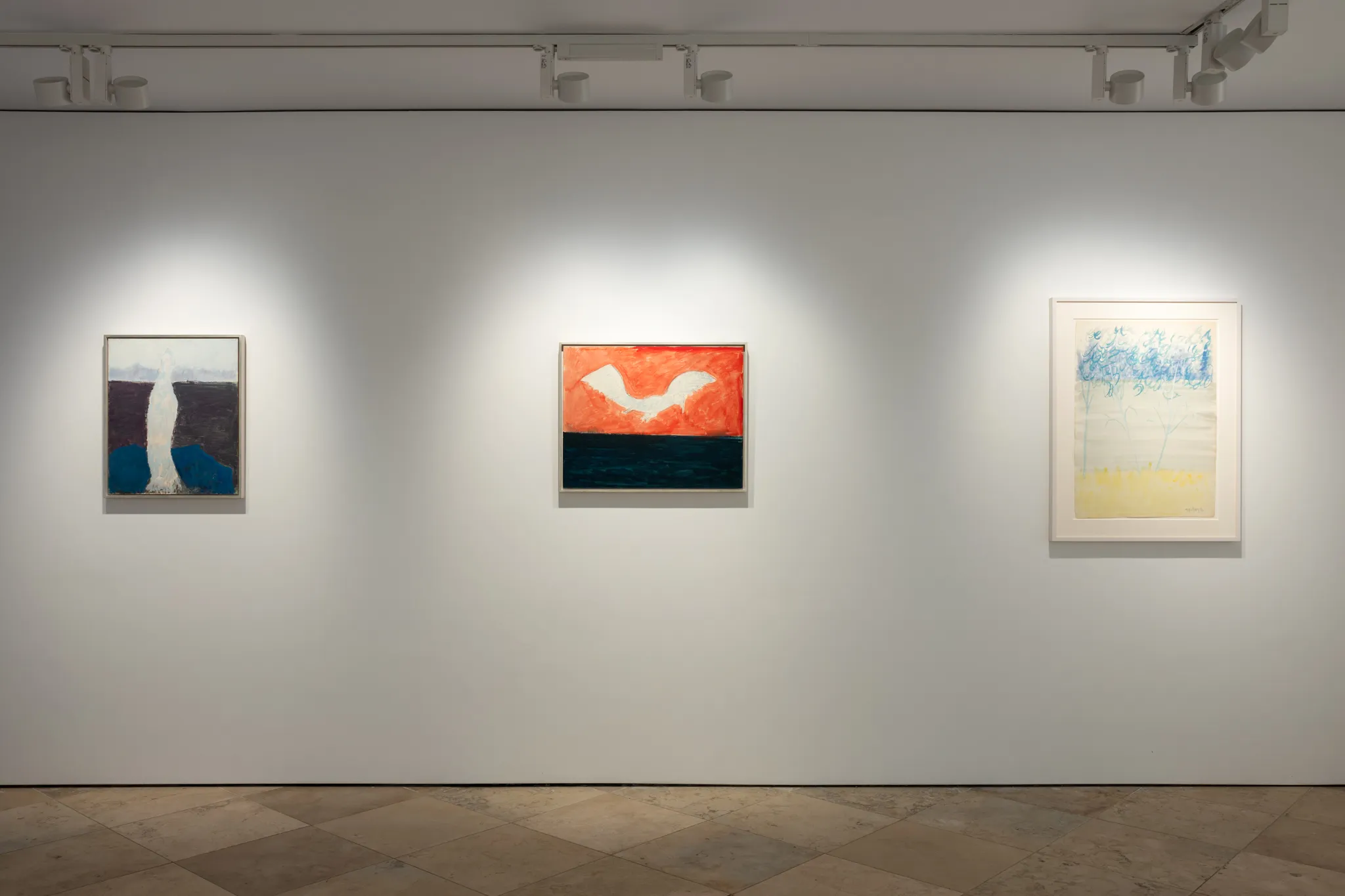
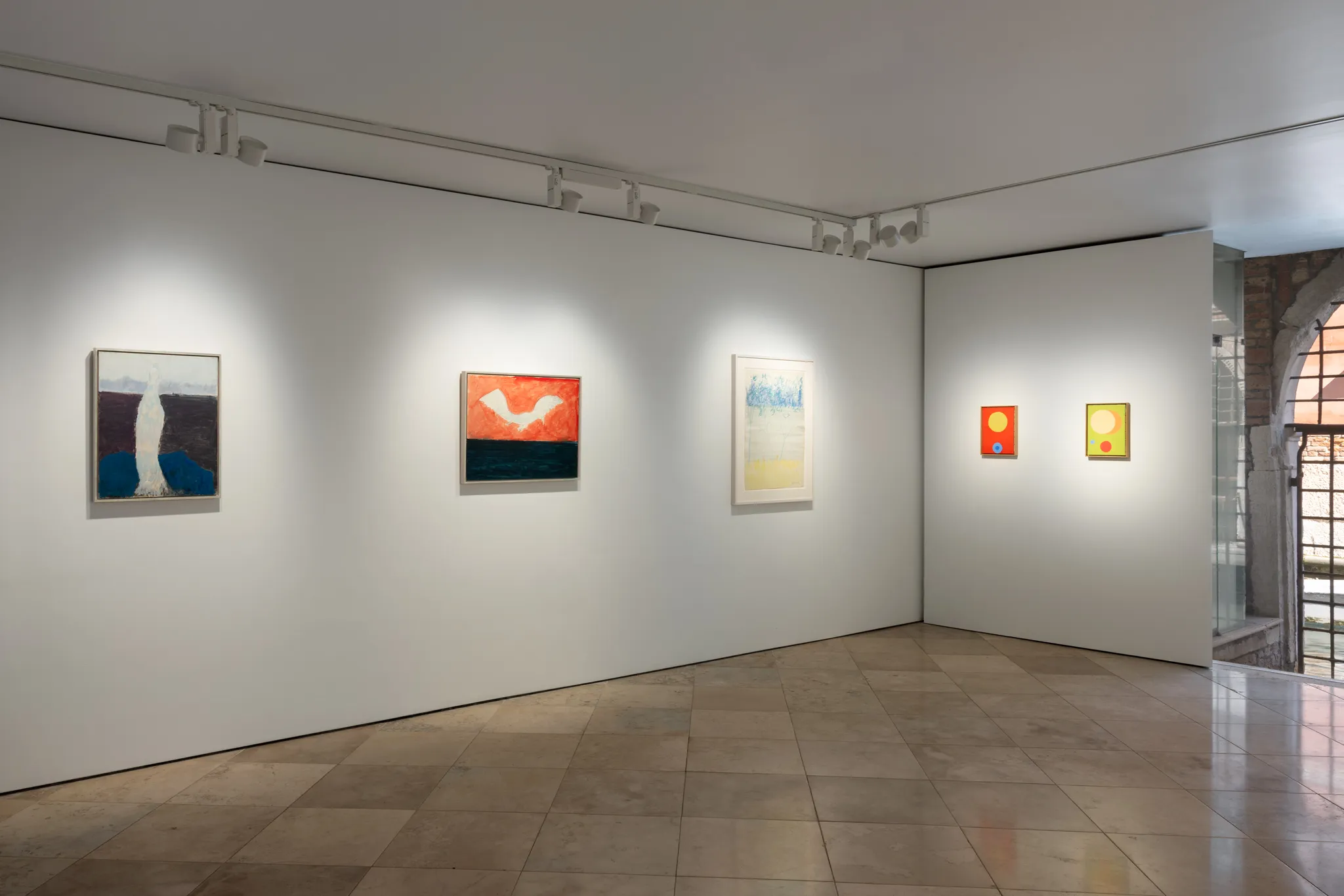
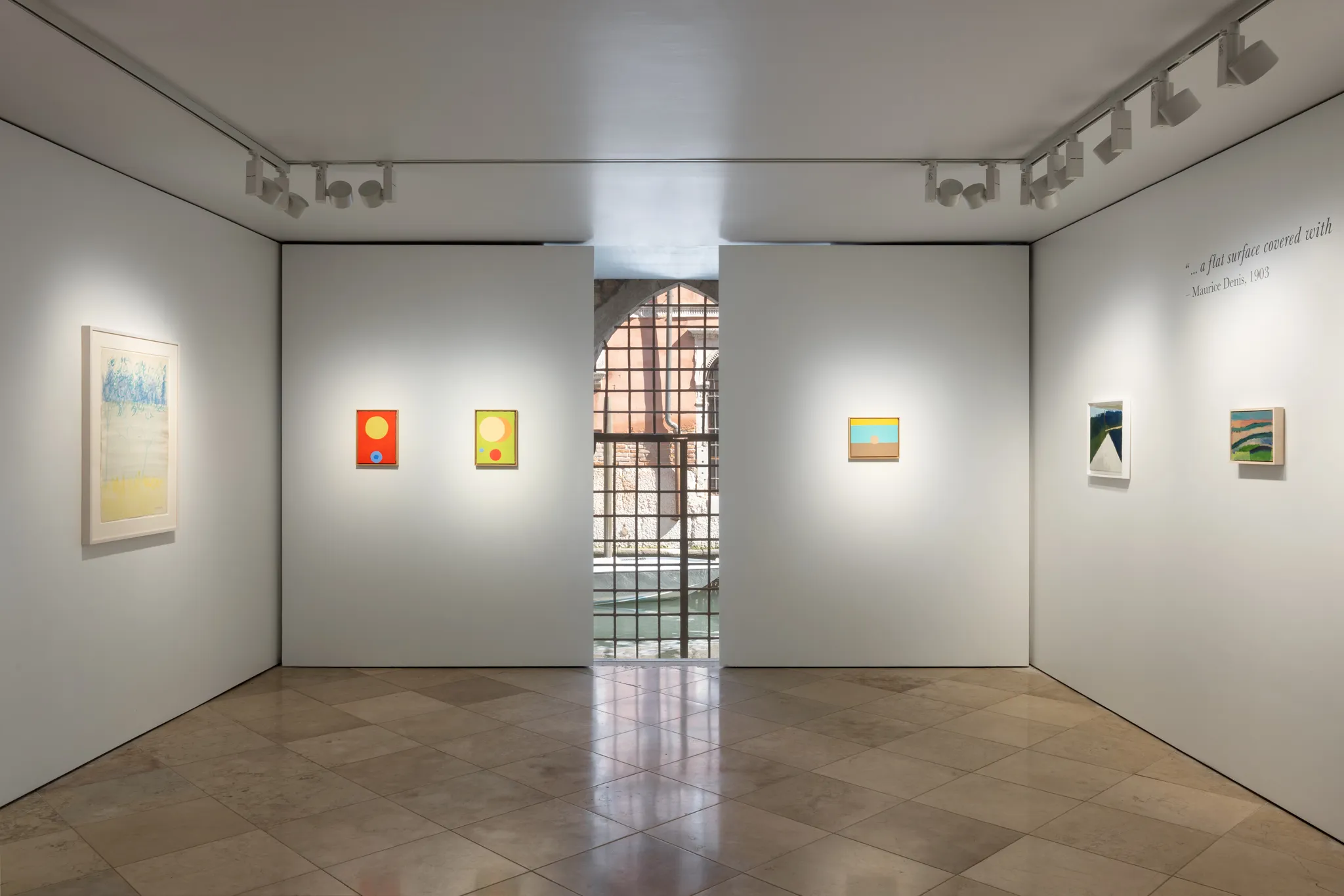
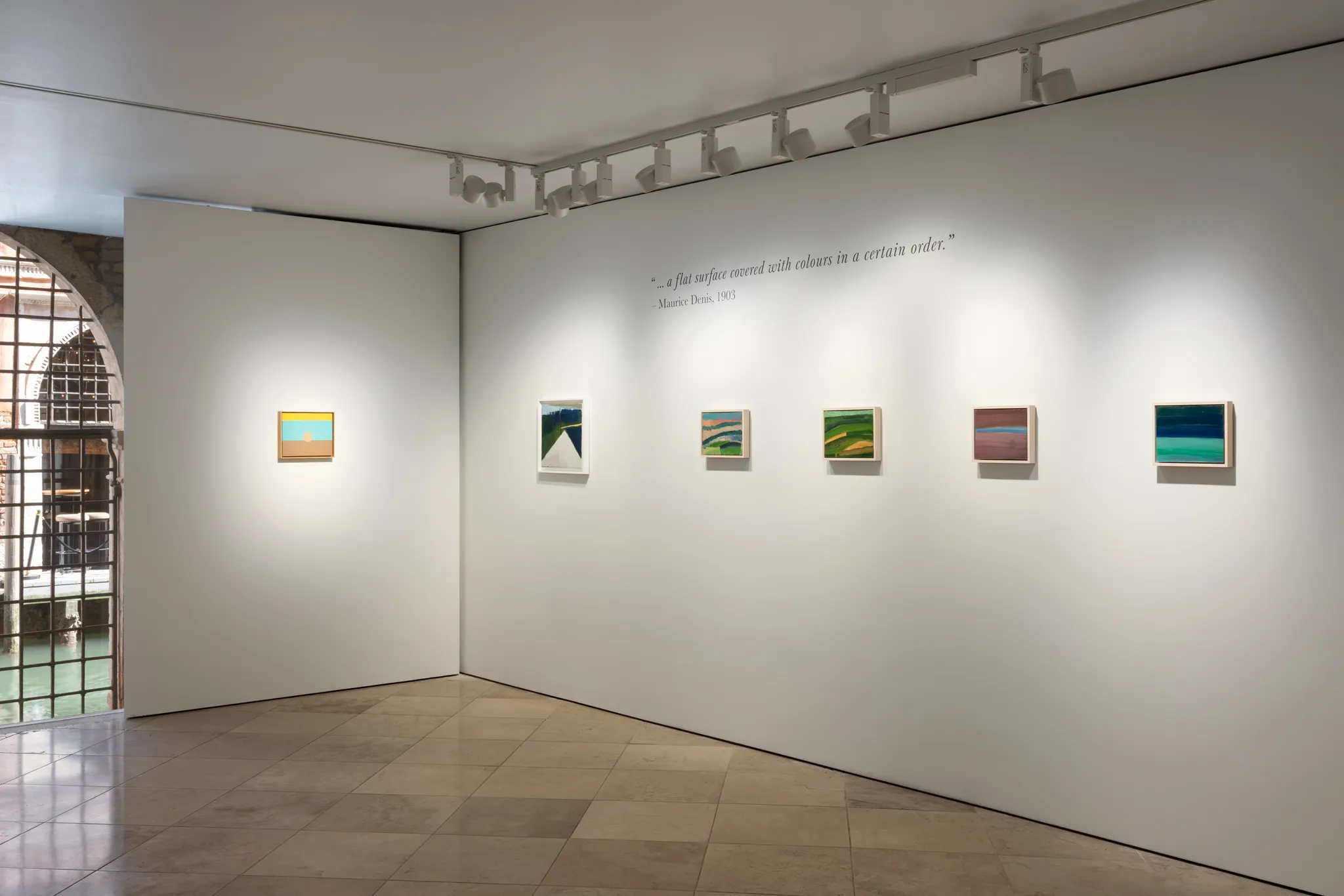
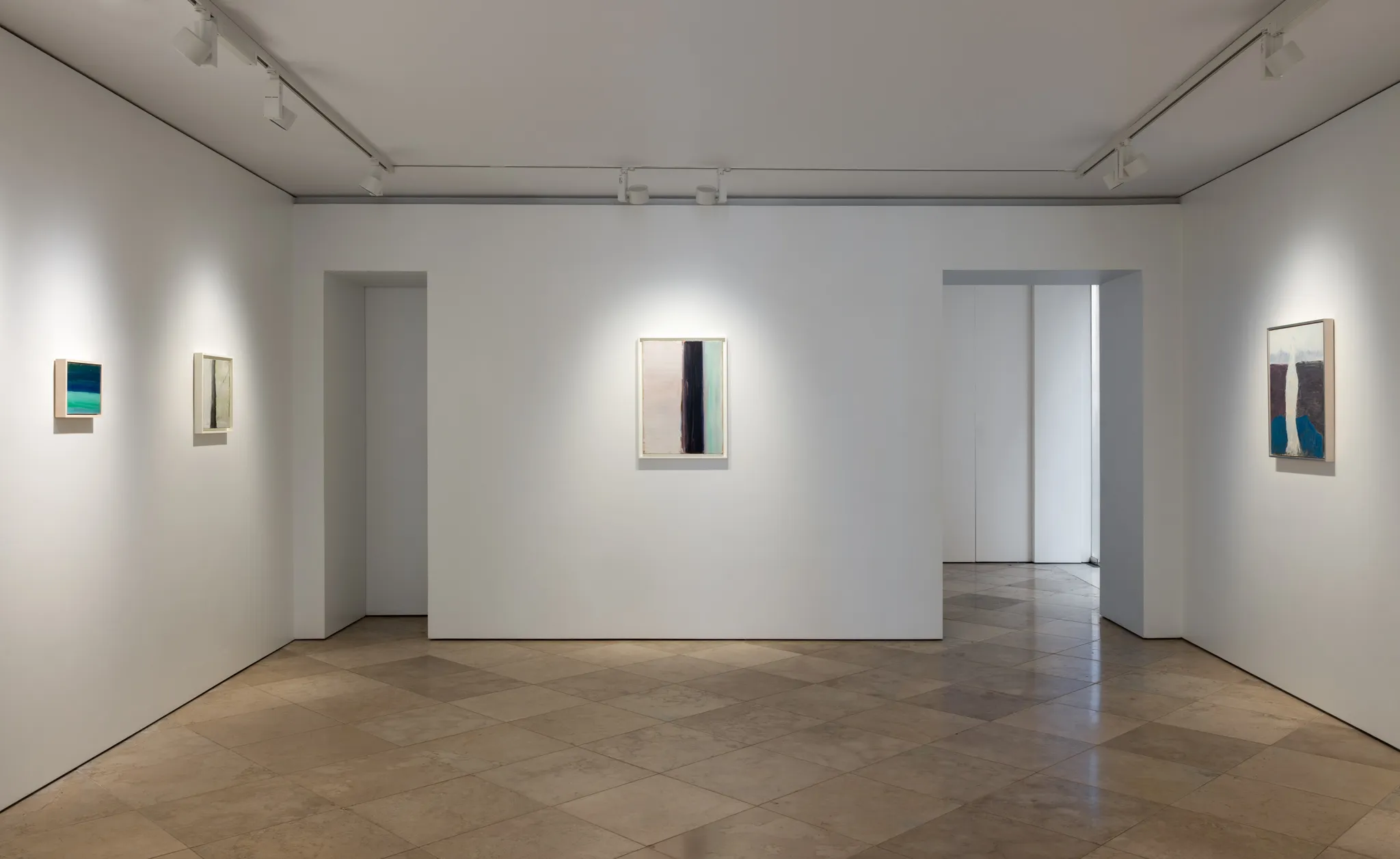
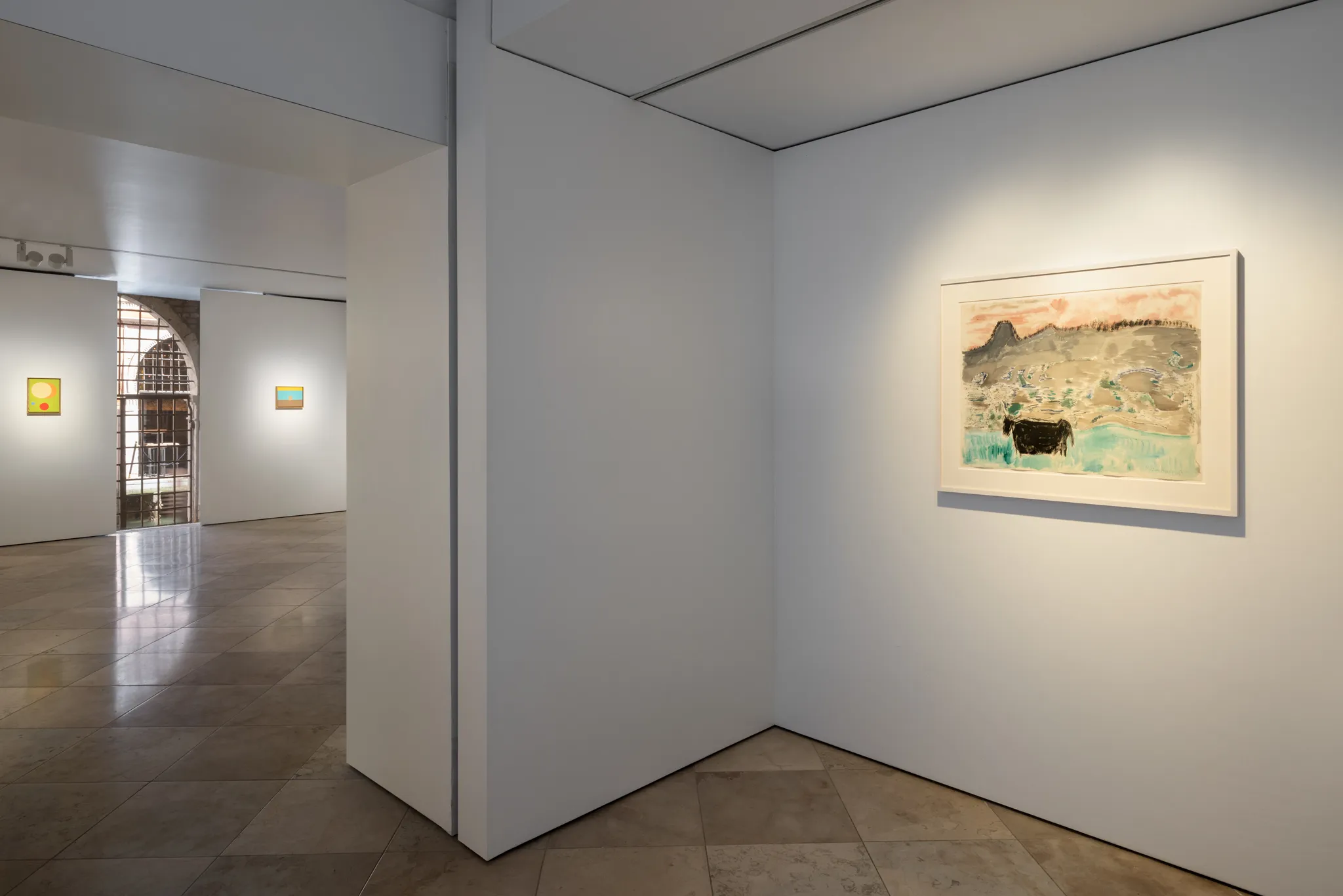
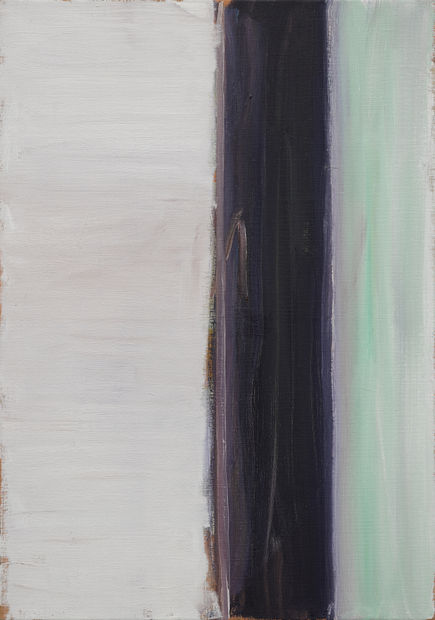
Victoria Miro is delighted to present Looking Outwards to Look Inwards, a three-person exhibition of paintings by Etel Adnan, Milton Avery and Ilse D’Hollander.
This exhibition features three artists whose lives spanned the twentieth century, working across different generations and geographies yet united by their distilled observations of place and the journeys that inspired them.
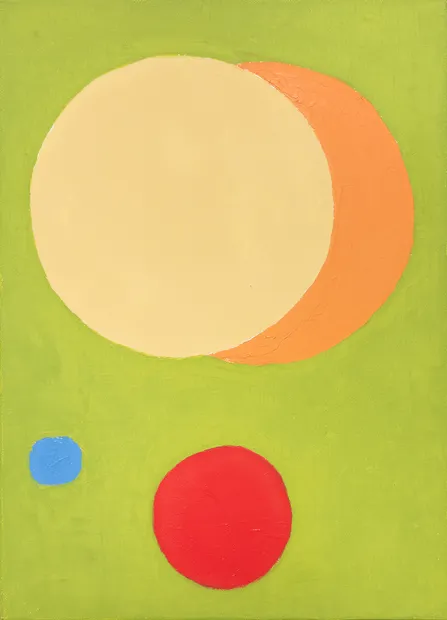
None of the paintings on view were made en plein air; the artists inhabited and experienced landscapes only to draw on them from memory back in the studio. In their canvases, the living landscape is translated into simplified, sometimes geometric, though always intensely charged passages of colour.
The exhibition is accompanied by a new essay, entitled Landscape and Abstraction, by Christopher Riopelle, Curator, National Gallery, London.
-
 Installation view, Looking Outwards to Look Inwards, Victoria Miro Venice, 2026
 -
‘Each paints vivid abstractions which nonetheless invite us to dream of those vistas we are yet to discover.’
– Christopher Riopelle
-
Milton Avery
One of the most influential artists of the twentieth century, Milton Avery (1885-1965) pursued an independent and steadfast course throughout his career. Drawing imagery from the world around him, in particular the landscapes and people he loved, his art is as intimate and accessible as it is towering in its ambition and achievement. With his focus on simplified forms and use of colour as a primary means of expression, in the 1930s Avery profoundly influenced and won the devotion of fellow US artists including future abstract expressionists Mark Rothko, Adolph Gottlieb and Barnett Newman. Yet, while seeking to express an idea in its simplest form, Avery never sought pure abstraction for himself. Above all, he is an artist who resists categorisation. 'I never have any rules to follow,' he stated, 'I follow myself.' -
Milton Avery, Bird in Evening Sky, 1963
-
-
Milton Avery, Fishing Bird, 1962
-
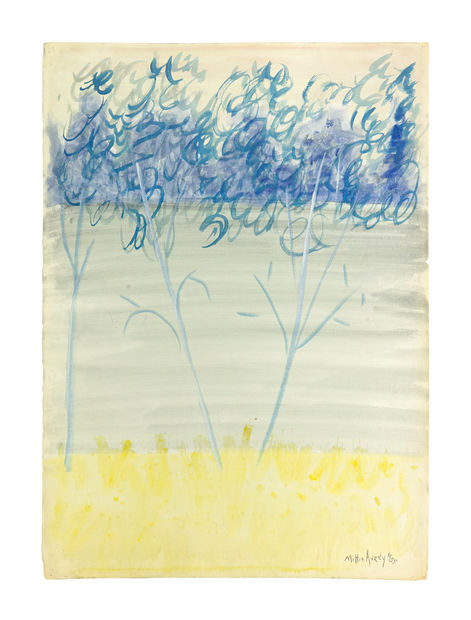
Milton Avery, Dancing Trees, 1955
-
-
Etel Adnan
Etel Adnan was born in Beirut, Lebanon, in 1925 and died in Paris, France, in 2021. An acclaimed poet, novelist and artist, she began painting in her thirties and gained widespread recognition as a visual artist through her inclusion in Documenta 13 in 2012. Adnan developed a distinct visual language, one rooted in colour, form and intuition, as her abstract paintings sought to capture the essence of land, sea, sky and cosmos. She revered nature and believed that its power was revealed through colour. She described painting as an impulsive act, completing each work in a single sitting, working indoors and entirely from memory. Laying the stretched canvas flat, like a page on a table, she applied oil paint directly with a palette knife, creating planes of colour that convey a placeless landscape from afar and reveal a brilliant intensity upon close observation. -
Etel Adnan, Untitled, 2013
-
-
Etel Adnan, Untitled, 2017
-
Etel Adnan, Untitled, 2017
-
Ilse D’Hollander
In her short life, Ilse D’Hollander (1968–1997) created an intelligent, sensual and highly resonant body of work. Her often small-scale canvases and works on paper are charged with references to the everyday. Yet, enlivened by an expressive, economical touch, her work resonates just as strongly as a sustained, self-reflexive enquiry into the act of painting. D’Hollander drew upon her impressions and experience of place, particularly the Flemish countryside where she spent the last, highly productive years of her life. While alluding to objects and places in the world, as well as specifics of temperature and light, D’Hollander’s paintings are seldom immediately recognisable as straightforward landscapes. Rather, they can be read as a series of accumulated impressions, adjustments and layerings – a visual record of the artist’s thought processes. -
Ilse D’Hollander, Untitled, 1989
-
-
Ilse D’Hollander, Untitled, 1995
-
Ilse D'Hollander, Untitled, 1996
-
Landscape and Abstraction
By Christopher Riopelle
→ Read here
-
Explore gallery exhibitions
-
Adriana Varejão: Modernisms
12 September – 31 October 2026 VeniceThis body of work is conceived in direct dialogue with the artist’s participation in the Brazilian Pavilion at the 61st International Art Exhibition of La Biennale di Venezia. While the tile... -
Hernan Bas: TIME TO SHINE! (the salesmen)
17 September – 14 November 2026 London Gallery IThe exhibition focuses on overlooked characters – from a perfume counter attendant and a gallerist who specialises in ‘cat-made painting,’ to a man who sells seashells by the seashore –... -
Khalif Tahir Thompson: Send in the Clowns
8 October – 7 November 2026 London Gallery IIIn these new paintings, Thompson invites viewers into the everyday lives of his subjects through vibrant domestic scenes, creating scenarios from his own childhood growing up in Brooklyn and today. -
Alchemies: May Cockcroft, Nour Malas, Sarah Martin-Nuss
13 November 2026 – 23 January 2027 London Gallery II, Miro PresentsThree emerging abstract painters whose distinct practices transform colour and material into evocative visual languages. -
Celia Paul: Objects of Desire
7 November – 12 December 2026 VeniceNew paintings examining the act of looking and being looked at. The exhibition coincides with the publication of a new book by the artist, Objects of Desire: An Artist in Venice, a... -
Conrad Shawcross: Shadows of the Mechanism
26 November 2026 – 23 January 2027 London Gallery IThe debut of a significant new body of work, Time Pebble, and an immersive, multi-sensory installation of the artist’s acclaimed series, Slow Arc inside a Cube.
-